Guide
Mikulás or St Nicholas? What’s worth knowing about 6 December
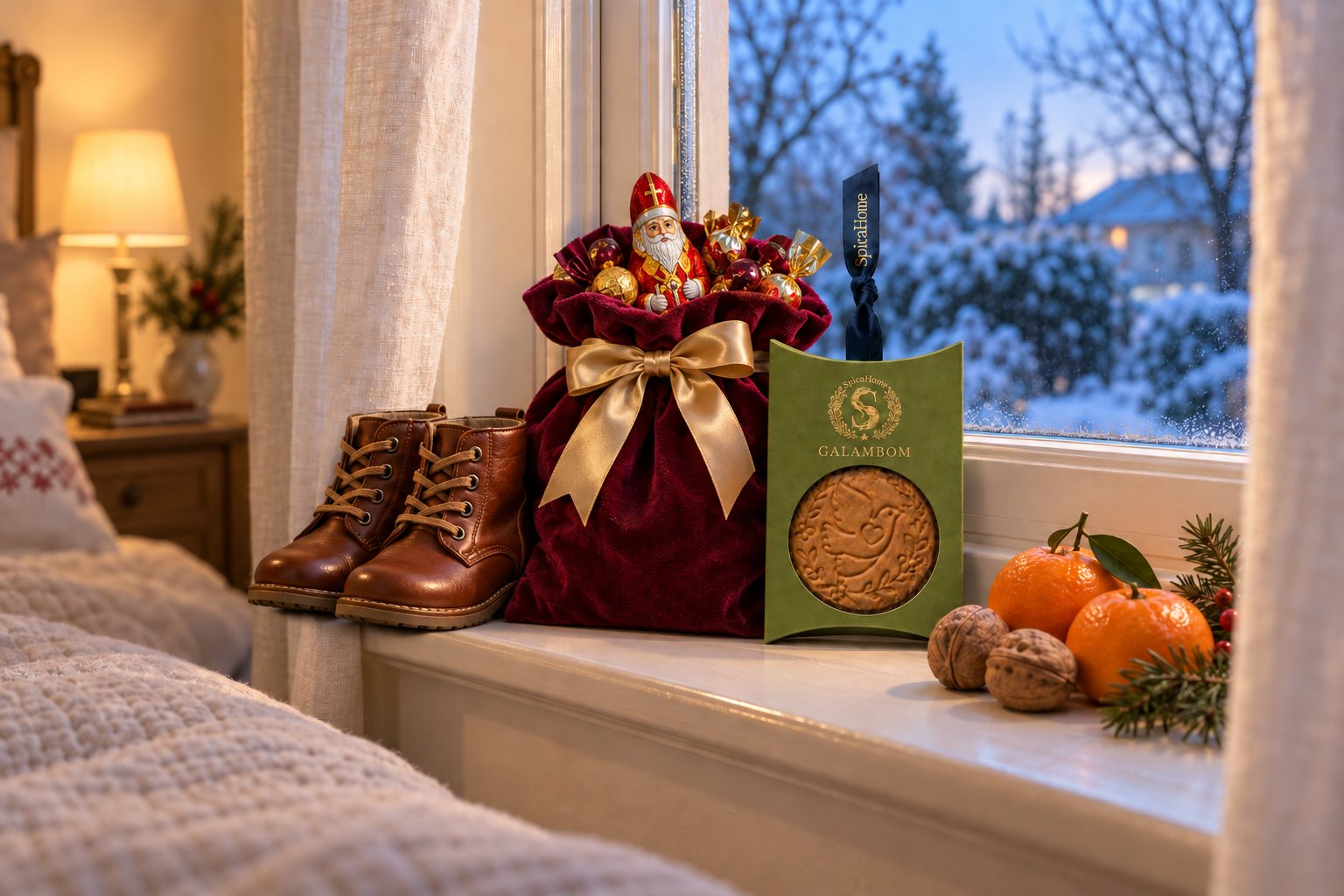
There is one day in December that almost everyone begins the same way. Someone leaves something in the window during the night, and in the morning pretends it wasn’t them. There is no dinner, no ceremony, no programme to follow – and yet it is there every year, and children never forget a single bit of it.
We think it is worth knowing what lies behind this custom. Not to make it seem weightier than it is, but because its story is genuinely beautiful – and because it also explains things we now do purely out of habit.
Who was St Nicholas, and when did he live?
Nicholas lived in the 4th century, on the southern coast of present-day Turkey, as bishop of Myra in Lycia. According to tradition he was born into a well-to-do family in nearby Patara, and after his parents died he gave away his inheritance to those in need. The Church remembers him as having died on 6 December, around 343. In 1087 Italian sailors carried his relics by sea from Myra to Bari, where they are still kept today – hence his other name, St Nicholas of Bari.
What keeps his figure alive to this day is not one great deed but a habit: he gave in secret. He did not stand before the poor so that they could see what he had done. The best-known story is about three young women whose father could not afford a dowry, leaving them with no prospects. On three nights, Nicholas threw a purse of gold through their window. The three purses became the three golden balls in his pictures – and this is also why, in Hungary, the gift arrives at the window.
Why do we celebrate Mikulás on 6 December?
Because in the Christian calendar, saints are usually celebrated on the day of their death, not their birth. Bishop Nicholas’s day is 6 December, and in sixteen centuries that date has not moved at all. It is one of the oldest days in our year that we have inherited practically unchanged.
The timing matters. 6 December comes a good two weeks before Christmas, and that is what made it what it is: the first sign that something has begun. Not the high point, but the overture. Looking through our occasions, this is the smallest-scale day for us too – and perhaps that is why it is also the easiest.
How did St Nicholas become Mikulás?
The name has travelled a long way, but its path can be traced all the way. The Latin Nicolaus became the Dutch Sint Nikolaas and then Sinterklaas; Dutch settlers emigrating to the New World took him with them, and there he was shaped into the English Santa Claus. By the 19th and 20th centuries, the red-suited figure arriving by sleigh that everyone recognises today had taken form. The Hungarian word Mikulás stayed closer to the source: it comes from the Slovak and Czech form Mikuláš.
In Hungary the two sit happily side by side. The presents are brought by Mikulás, but the calendar marks St Nicholas Day. We don’t think this is a contradiction. Rather, it is good to know where each comes from, because the story behind it gives more than it takes away.
Nicholas gave in secret. That is still the heart of the custom today: the gift arrives at night and asks for nothing in return.
What is traditionally put in the boot?
In the Hungarian tradition: walnuts, hazelnuts, apples, oranges and sweets – in other words, things that get eaten. This is not a meagre choice but the day’s original measure: in winter, citrus fruit and nuts were themselves a rarity. The birch switch was added much later, and its original meaning was more of a warning than a punishment.
If you would like to add something more lasting, we suggest keeping it small and personal. A sentence on a slip of paper, a photograph, a little object that fits in the leg of the boot. 6 December is not a day for big presents – that is what Christmas will be for, and it has its own rhythm.
What should you give adults on 6 December?
Giving to adults on this day is an old and very lovely custom, and we see more and more people taking it up. For a colleague, a neighbour, a teacher, someone you only exchange greetings with all year – a small kindness carries noticeably more weight on this day than at other times. Precisely because nobody expects it.
The GALAMBOM box fits roughly this scale. Inside is a handmade gingerbread made with, among other things, white rye flour, local farmers’ blossom honey and cane sugar, from a workshop in Budakeszi – and beside it a hidden satin ribbon which, when pulled out, reveals a single sentence from a Christian saint. There are twenty-four different messages, so in an office of fifteen people there will be plenty of different ones to read out and compare.
One box costs €4.20. From ten boxes the unit price is €4.00, and for larger quantities, by individual agreement, the accompanying card can also carry your own text. If you are giving to a whole team or department, we have a separate page on corporate gifts, including our price tiers.
When should you order a St Nicholas gift?
Things made by hand need time. Our production time is two to three weeks, or three with a custom accompanying text – plus shipping. For 6 December, that means it is best to place your order by mid-November, or by early November for larger orders. Shipping of GALAMBOM begins in early November.
Within Hungary, delivery to a parcel locker costs €3.33, free over €42.00; home delivery costs €7.81, free over €84.00. To Austria and Germany, shipping is €22.37 per order. If you are unsure how many to order, just write to us – most of the questions we receive are about exactly this, and we are happy to help you think it through.
Why has this day endured?
What we love about this feast is that there is nothing showy about it. No table to set, no gathering you have to attend, no expectations. All that happens is that someone left something in the window during the night and, in the morning, won’t say it was them.
Over sixteen centuries almost everything around it has changed: the language, the clothes, the story, the name. This one thing has not. And perhaps that is exactly why it is still worth giving just as much as this day can hold – no more, but out of attentiveness, a little more than is customary.
Frequently asked questions
Mikulás or St Nicholas? What’s worth knowing about 6 December
They are one and the same person. St Nicholas was a 4th-century bishop of Myra, and Mikulás is the Hungarian form of his name, which came from the Slovak and Czech Mikuláš. In the West his name took another path: the Dutch Sint Nikolaas became Sinterklaas, Sinterklaas became the English Santa Claus, and from there came the figure in the red suit. By tradition, 6 December is the day Nicholas died, which is why it became his feast day.
Why do we celebrate Mikulás on 6 December?
Because, according to Church tradition, Bishop Nicholas died in Myra on 6 December, around the year 343. In the Christian calendar, saints are usually celebrated on the day of their death, not their birth. The date has never moved since: for more than sixteen centuries, 6 December has been St Nicholas Day.
What goes in the boot?
In the Hungarian tradition: walnuts, hazelnuts, apples, oranges and sweets. The birch switch came later, and it was originally more of a warning than a punishment. If you would like to add something more lasting, keep it small and personal: 6 December is not a day for big presents – that is what Christmas is for.
Who was St Nicholas, really?
Nicholas was bishop of Myra, on the southern coast of present-day Turkey, in the 4th century. He was born into a well-to-do family and, according to tradition, secretly gave away his inheritance to those in need. In 1087 his relics were taken by sea from Myra to Bari in Italy, where they are still kept today.
What should you give adults for St Nicholas Day?
Something small that fits in a boot or on a table: something sweet, a good tea, a handwritten line. 6 December is a day for attentiveness, not for big-ticket items. For a colleague, a neighbour or a teacher, a small, modest gift carries noticeably more weight on this day than on others.
When should you order a St Nicholas gift so that it arrives in time?
For a handmade gift, allow two to three weeks for production, or three with a custom accompanying text. For 6 December, that means placing your order by mid-November. Shipping of the GALAMBOM box begins in early November.
What do the three golden balls in pictures of St Nicholas mean?
They refer to the best-known legend: on three nights, Nicholas secretly threw a purse of gold through the window of three young women whose father could not afford a dowry. The three purses became the three golden balls in his pictures, and this is also where the custom of the gift arriving at the window comes from.
 Written by the SpicaHome editorial team. If you have a story you think we should share, write to us – we read every message.